Brain tumors
Our specialists combine the science of medicine and the power of hope. We hold your hand each step of the way through comprehensive brain tumor care that integrates science, innovation and expertise with personalized guidance and support.
Receive individualized care
Your integrated care team will design a comprehensive treatment plan tailored to deliver the best outcomes for you and your family. As pioneers in the latest brain tumor treatments, Atlantic Health leverages cutting-edge technologies, techniques and novel therapies to bring life-saving results to our patients.
A word from a patient
"I really want people to know being diagnosed with cancer isn’t a death sentence. Medicine has come so far, and even with cancer, you can live a normal life."
Edward B., brain tumor patient
Meet your team
Your team of nationally-recognized specialists is handpicked based on your specific situation. This ensures you receive best-in-class medical care and the support you need throughout your journey.
Support for patients and families
We back up the best medical care with the best support services because your emotional and mental well-being is critically important to your journey. That’s where our patient navigator, social workers, advocates, support groups and additional resources come in.
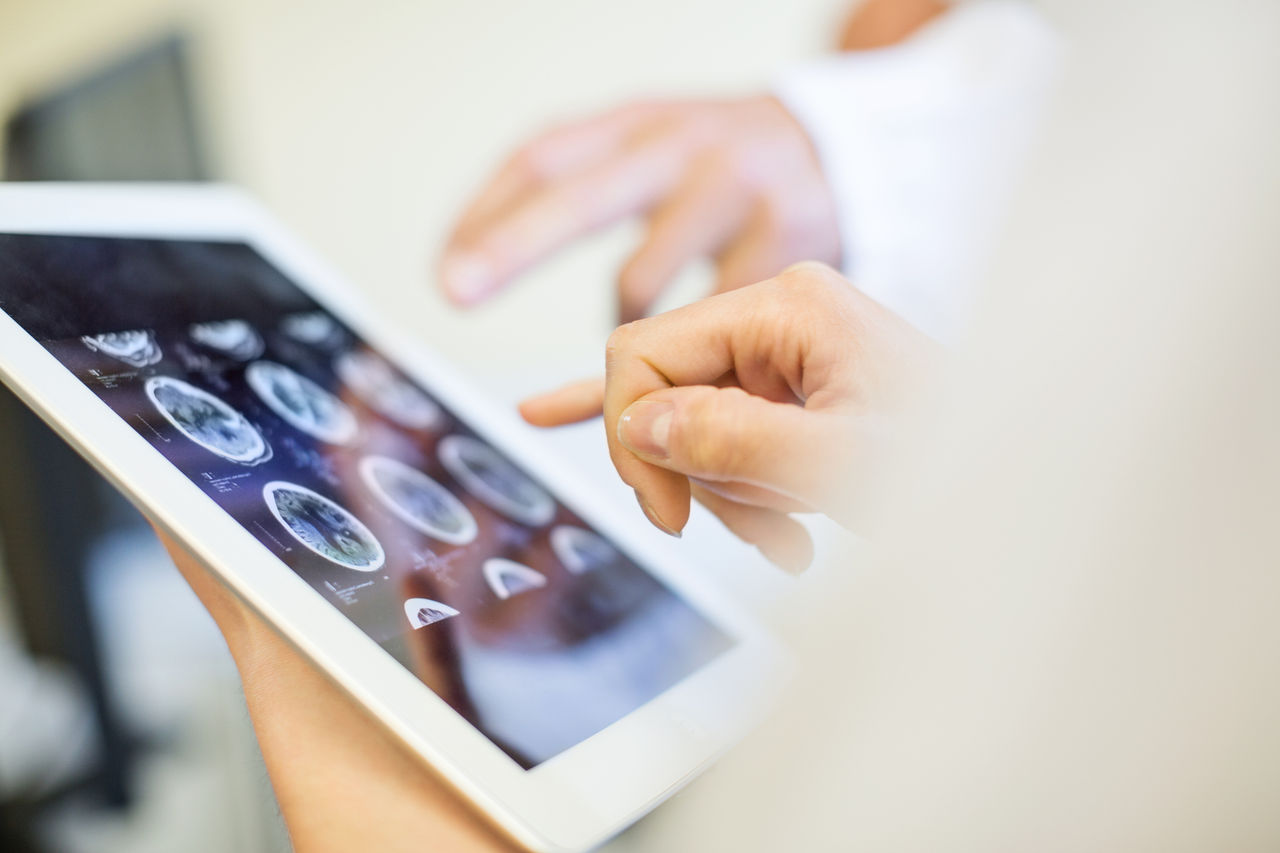
Brain tumors and related conditions we treat
Other conditions we treat
Central neurocytoma
Cerebellar and brain stem tumors
Cholesteatoma
Colloid cyst
Epidermoid and dermoid tumor
Hemangioblastoma
Hemifacial spasm
Juvenile nasopharyngeal angiofibroma
Medulloblastoma
Radiation necrosis
Paranasal sinus cancer
Primary CNS lymphoma
Rare glial and neuronal tumors
Skull base chondrosarcoma
Spinal cord tumors
Vertebral body tumors
Brain tumor treatment options
At Atlantic Health, we treat brain tumors using individualized treatment plans that incorporate some of the safest and most advanced techniques available.
Treatment and expertise
The expertise of our clinical staff is constantly growing. Cutting-edge technologies and techniques we use include CyberKnife, conformal radiation, brain mapping and awake surgery, image-guided stereotactic volumetric craniotomy, fluorescent imaging, minimally invasive endoscopic brain surgery and more.
Advanced techniques
Our deep expertise in brain tumor care spans a wide array of novel treatments and therapies that help deliver the best possible outcomes to our patients. Treatments include:
We use precise, high-dose radiation with pinpoint accuracy to target cancerous and non-cancerous tumors without damaging surrounding healthy tissue. Radiosurgery is a non-invasive and painless treatment in which robotic technology is used to deliver pinpoint beams of highly focused radiation. This form of focused radiation has improved the quality of life for many of our patients with brain tumors.
Neurosurgeons use specialized tools to temporarily remove part of the bone of the skull to access a brain tumor. We use the latest techniques and technology — like stereotactic 3D image guidance, high-powered robotic microscopes, fluorescent imaging, 3D volumetric techniques and more — to make this procedure as safe and effective as possible. These advanced visualization techniques enable our surgeons to use smaller incisions during surgery.
A computer system in the operating room helps our neurosurgeons achieve pinpoint accuracy. The system combines MRI-based imaging with other functional imaging and brain connectivity information into a 3D model of the patient’s brain. Our neurosurgeons can use this model — much like a map and GPS device — to safely remove as much of the tumor as possible and to calculate safe pathways to deep-seated tumors that are otherwise considered inoperable.
We use functional brain mapping when tumors or neurological conditions occur near important movement, sensory and language centers of the brain that are unique to each patient. Our neurosurgeons and their team of neurophysiologists use electrical stimulation to interactively map these functional areas during surgery while the patient is awake and under the care of a specialized anesthesiologist. Speech and motor functions are monitored and preserved while as much of the tumor as possible is removed.
Using stereotactic image guidance and a small fiberoptic camera called an endoscope, neurosurgeons can safely remove tumors deep within the brain, ventricles and skull base, including the pituitary gland. They do this with great accuracy through small, minimally invasive incisions or by simply going through the nose. A team of specialists, which may include an otolaryngologist (ENT) and a neurosurgeon, usually performs these procedures together.
Our team is one of the few in New Jersey to harness the power of fluorescent imaging, a groundbreaking technology. After drinking a liquid solution, a patient’s cancerous tumor glows a pink, fluorescent color. Using a special microscope and filter, our surgeons can distinguish the cancer cells from healthy brain tissue for precise removal of the tumor.
Open skull base surgery has become safer and more effective because of advanced surgical techniques that use high-powered magnification. In this surgery, the bone at the bottom of the skull is removed to access hard-to-reach tumors. In some cases, minimally invasive techniques and endoscopy are also used. A multi-disciplinary team of specialists plans the surgery and follow-up treatments. A team of neurophysiologists assists during the procedure to ensure critical brain and delicate nerve functions are monitored and preserved.
A minimally invasive surgical alternative to open craniotomy. LITT may benefit patients with brain tumors, radiation necrosis, or medically refractory focal epilepsy. While the patient is asleep under anesthesia, the surgeon creates a small hole in the skull. Using MRI and robotic guidance, the surgeon navigates a fiberoptic wire toward the tumor. Once the fiberoptic wire is in place, a laser is used to thermally destroy the tumor or create a lesion. The procedure is completed in the MRI suite where the thermal damage to the tumor is visualized in real time. The surgeon then removes the wire and closes the incision.
Using a minimally invasive embolization procedure, our endovascular neurosurgeons can shut down the blood flow to a tumor in preparation for surgery. This causes the tumor to shrink, makes removal easier and reduces risks of bleeding and nerve damage during surgery.
Experts in both neurology and oncology, our neuro-oncologists specialize in treating cancers that start in — or spread to — the brain and central nervous system. With a robust clinical trial and research portfolio, they deliver extraordinary brain tumor care and treatment for the neurological complications of cancer. We work closely with each patient’s medical oncologist to maximize quality of life. This includes helping manage the headaches, strokes, seizures and nerve problems (peripheral neuropathy) that may arise from chemotherapy or cancer itself.
New treatments for brain tumors — such as drugs that target a specific mutation found in a subset of tumors – are proposed every year. We use each patient’s brain tumor molecular profile — a unique map of all the mutations within their brain tumor — as a guide to determine which potential cutting-edge therapy may be effective. These profiles also drive our understanding of tumor behavior and treatment, help us identify mutations that do not yet have treatments, and inform future studies and the development of new drugs.
Immunotherapy uses the body’s own immune system to fight cancer cells as if they were an infection. Having already shown impressive results in other cancers, the use of immunotherapies in brain tumor treatment is growing. Our team offers immunotherapy treatments to our patients and explores ways to further harness this technology.
Tumor-treating fields (TTFields) therapy uses alternating electromagnetic fields to disrupt cancer cell division. These fields are delivered through ultrasound and act regionally and noninvasively to inhibit tumor growth. TTFields therapy is U.S. Food and Drug Administration-approved for the treatment of glioblastoma multiforme, the most common and aggressive brain cancer. Studies demonstrate improvement in overall survival when added to standard therapies.
New advances are opening the door to novel chemotherapy treatments. These include the use of molecular information about individual patients’ tumors to determine the best chemotherapy regimen, new medications that block the growth of resistant cancer cells, new combinations of therapies and immunotherapy that stimulate a patient’s own immune system to selectively attack cancer cells.
This type of radiation therapy uses imaging scans to accurately deliver high-energy beams of radiation to a narrowly focused area of the brain or skull base. With the help of our physicists and radiation oncologists, imaging scans are conducted prior to each treatment and the patient’s position is monitored throughout the radiation treatment.
Our robust clinical trial research program brings innovative treatments and new therapies to our patients — from the latest in immunotherapy and chemotherapy to treatments guided by genetics.
Our neuropathologists specialize in microscopic tissue examination and the emerging field of molecular diagnostics. By studying the unique genetic profile of each tumor using modern gene-chip technology, we can determine genetic mutations faster than ever before. This empowers us to design tailored, targeted treatments based on each tumor’s DNA. We are one of the only centers with these specialists.

Brain tumor diagnostic tests and screenings
At Atlantic Health, we know that the timely, accurate diagnosis of brain tumors is vital to improving outcomes. Tests that we use to diagnose tumors include:
- Magnetic resonance imaging (MRI) with diffusion and perfusion imaging
- Functional MRI
- Diffusion tensor imaging (DTI)
- Stereotactic image-guided brain biopsy
- Neuropathology and tumor subtyping
- Molecular testing
Do you have tests to submit for diagnosis?
Brain tumor patient and family resources
At the Gerald J. Glasser Brain Tumor Center, we believe no one should navigate a brain tumor diagnosis alone. That’s why we’re dedicated to providing patients and their families with resources and support that offer compassion and comfort during this challenging time.
Lean on our team
We are here to support you every step of the way. Our patient navigator, dedicated social worker, patient and family advocate and our support group will help keep you hopeful and strong.
Center for Hope Foundation support group
In a caring environment that fosters mutual understanding, patients, family members, physicians, nurses, staff members and a guest speaker meet to share, learn and discuss the challenges and successes of living with a brain tumor. Call us for more information or to attend the next meeting.
Patient navigator and social worker
They regularly meet with patients and their caregivers while handling every detail of specific services you might need.
Patient and family advocate
Our patient and family advocate offers the counseling that helps promote emotional and mental well-being.
Glasser Brain Tumor Center resource guide
This guide will help patients and caregivers find resources to assist in finding out more about a diagnosis, ways to seek support and suggest next steps following a diagnosis.
What to expect: Pre- and post-operative guide
We have compiled answers to questions you may have about your upcoming treatment. Please take the time to read this helpful information, and contact us with any questions or concerns.
Make an appointment, call, fax or ask for information
Schedule a time to talk
You have questions. We have answers. Schedule a time to talk with us about your condition or second opinion needs. You will not be charged for this call.

Refer a patient
If you are a physician making a referral, please supply the following records:
- Pathology report
- Operative or procedure report
- All head and/or spine MRIs and CTs, including the most recent and those taken pre-operatively
- If surgery occurred and involved more than a biopsy, we must have both pre- and post-operative MRIs for comparison.
- If the patient had or is currently having radiation therapy, we must have a post-radiation MRI.
- All physician notes pertaining to patient diagnosis and treatment
- Radiation and chemotherapy notes including treatment summary if applicable
- The most recent lab work, taken within five weeks of the request
Awards & accreditations
Need an appointment?
Speak with our care team to schedule an appointment — whether it’s a first visit or a second opinion.